Events
Whether you work in the public sector, private industry, or civil society, our events provide a valuable platform for knowledge exchange, collaboration, and informed debate.
Upcoming Events
Past events
Rethinking AI: Social Science and Humanities Network Symposium
Revitalisering af AI: Symposium for netværket for samfundsvidenskab og humaniora
Denne workshop ved årets Nordic AI Meet henvender sig til forskere fra Norden som er tidligt i deres karriere. Hvordan kan forskere inden for humaniora og samfundsvidenskab påvirke, hvordan mennesker og organisationer forstår og forholder sig til AI på en anderledes måde, som (forhåbentlig) vil føre til bedre beslutninger og samfundsmæssige resultater, end det ville have været tilfældet uden deres bidrag?

ThursdAI: China and Robotics: Embodied AI and the Future.
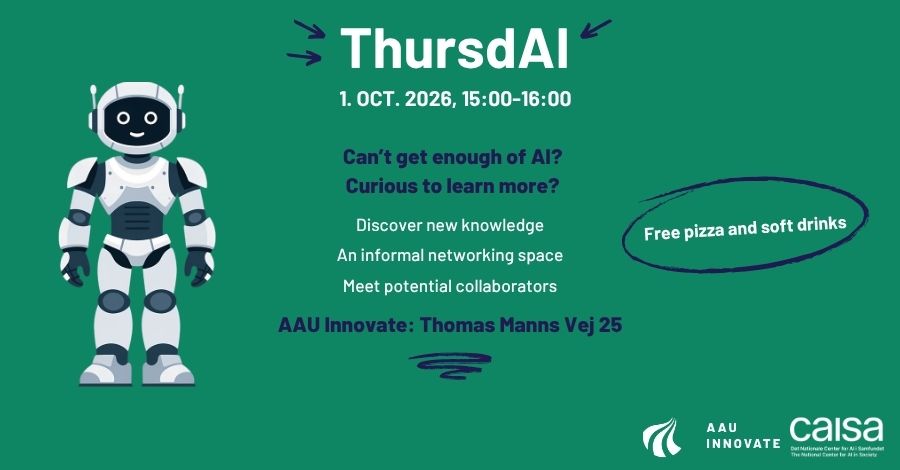
CAISA, in collaboration with AAU Innovate, is launching its first ThursdAI.
For this inaugural ThursdAI, the theme is China and Robotics: Embodied AI and the Future. We will wrap up the event with complimentary pizza and soft drinks, along with plenty of time to meet new people, exchange ideas, and build new connections.
Between Automation and Judgment: Digital Technologies and AI in Teachers’ Professional Work
Digitalization has long shaped teachers’ work. At times, technologies support teachers’ professional judgment, while at other times they automate and replace it. Digital learning materials structure entire instructional processes, select tasks for students, and provide rapid overviews of student progress. Today, new forms of automation are emerging through tools based on generative AI, designed to support teachers’ preparation, planning, and evaluation.
Data quality challenges in the age of AI – workshop with danah boyd (invite-only)
CAISA is hosting a workshop on data quality and legitimacy in the age of AI, featuring a keynote by Professor danah boyd (Cornell University).
Please note that this is an invite-only event.
Relevant participants may express their interest by contacting Irina Shklovski at ias@di.ku.dk.
CAISA at Folkemødet 2026
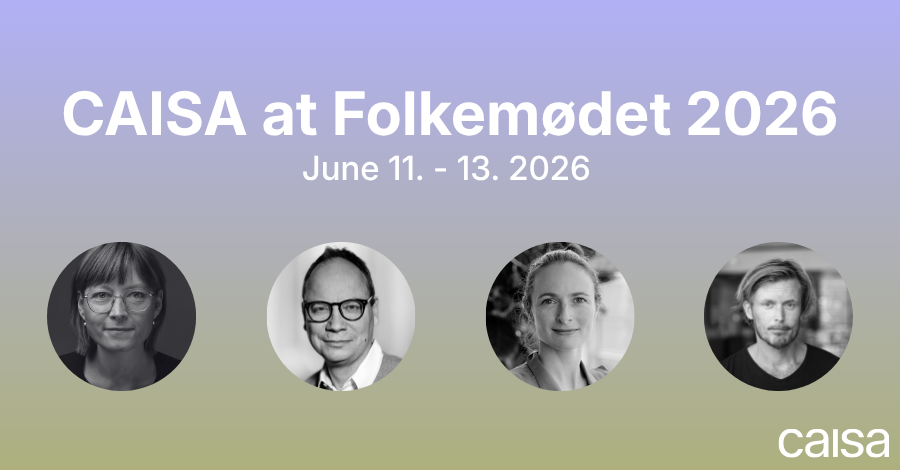
How is artificial intelligence shaping the future of society? CAISA is participating in Folkemødet 2026 with research-based perspectives on digital sovereignty, democratic participation, and the role of AI in societal development.
On Friday at 2.00 p.m., CAISA will host a debate on social media and digital sovereignty, focusing on the digital public sphere and European alternatives. In addition, CAISA’s researchers will contribute broadly to discussions on AI, welfare, education, and geopolitics.
WEBINAR: Digital Sovereignty – Establish a Common Language and Understand the Key Domains and Control Regimes

Digital sovereignty is a central concept that can mean different things. When a shared language is missing, decisions become difficult – precisely as Europe's dependence on cloud technology grows, and the AI race between Washington and Beijing accelerates. CAISA invites you to a webinar on the concept's meaning and a common language.
Hvem ville ChatGPT stemme på, og hvorfor er det vigtigt?

A timely discussion in the wake of the Danish national elections
Join us on April 16, 2026 for croissants, coffee, and a very timely and highly relevant one‑hour event examining how voters increasingly turn to AI chatbots for political guidance, and what this means for information quality, democratic participation, and digital critical thinking...
Hey Chat... Who Should I Vote For? (Translated)
The use of generative artificial intelligence is rapidly increasing, and today three out of four young people aged 16-24 use this technology - often in private contexts. This means that first-time voters, who may not yet have engaged deeply with politics, are increasingly turning to chatbots for guidance and advice. This development presents important opportunities, but also significant risks.
Research Webinar: The use of chatbots in the Public Sector
Join CAISA for an online webinar, launching our new research brief "The Use of Chatbots in the Public Sector". In the research brief, we synthesize current scholarly evidence on the implementation and use of chatbots in public-sector workflows and citizen-facing services.
Far Right, Tech Giants, and the Future of Global Governance: A Roundtable on Power, Populism and International Order

Join a high-level roundtable on forces reshaping politics and tech: Professor Sarah de Lange, from University of Leiden, on The Global Rise of the Right; Stephanie Hoffmann, from the European University Institute, on The Crisis of Multilateralism; and CAISA Director and Professor Rebecca Adler-Nissen, from Copenhagen University, on The Power of Tech Giants.
ADD Partner Conference 2025
Will we see a world with AGI - and how do we prepare?
Professional Seminar: AI, Expertise and Judgement in the Public Sector (WAITLIST)
What happens to professional expertise when AI becomes an integral part of tasks in the public sector? CAISA invites you to a professional seminar offering dialogue across research and practice on AI in public administration.
Symposium: Digital Sovereignty

The Royal Danish Academy of Sciences and Letters' Digitalisation Committee invites you to an interdisciplinary symposium on digital sovereignty.
D3A Conference 2025

CAISA is participating in the D3A Conference 3.0, organized by DIREC, the Danish Data Science Academy, and the Pioneer Centre for Artificial Intelligence.
CAISA at The People's Meeting (Folkemødet)
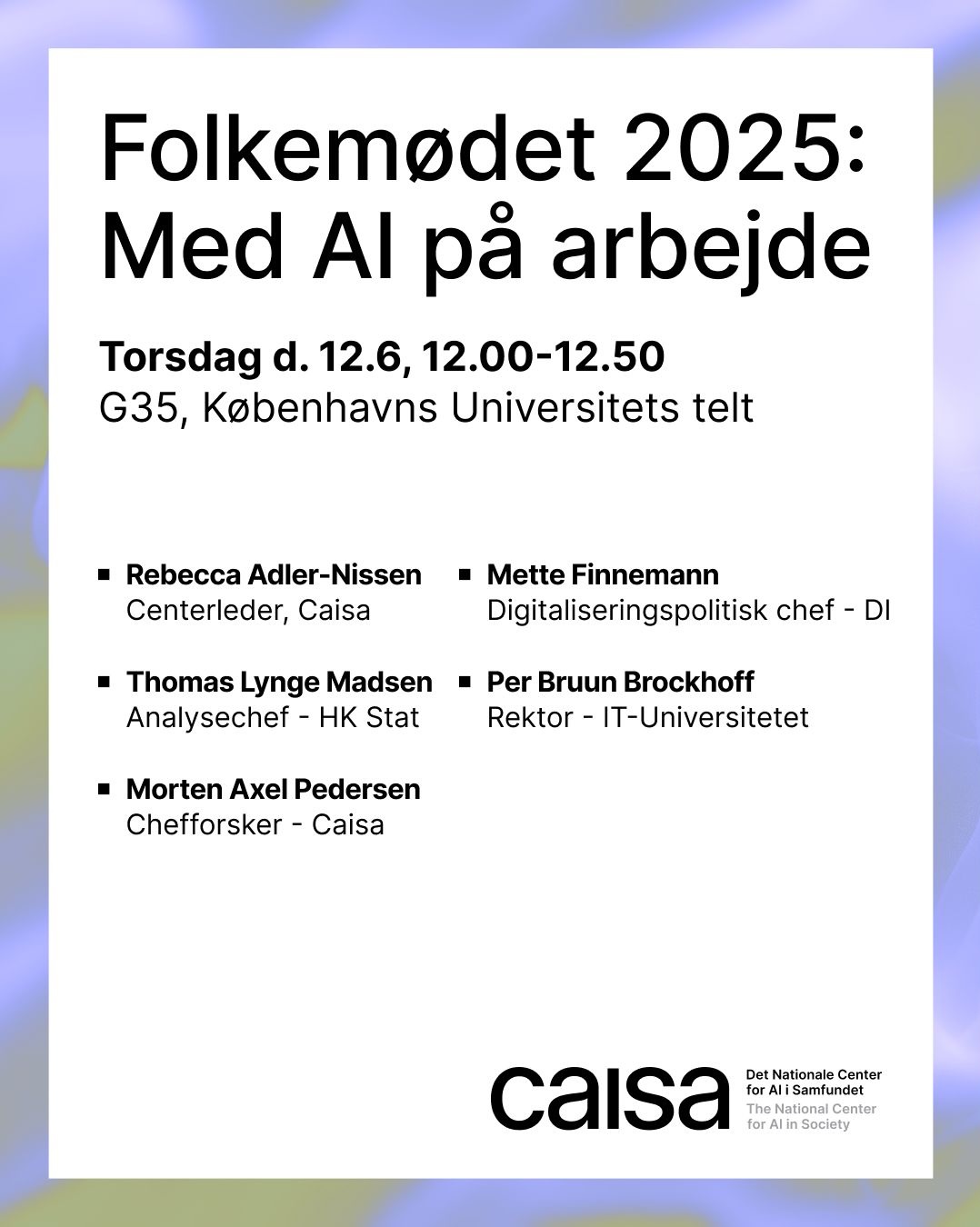
Join our event this Thursday: AI at work (Translated). Together with an expert panel, we will discuss artificial intelligence and the labour market covering current opportunities, key challenges, and future developments.
AI Building Blocks: Need-to-Do and Nice-to-Do in the Race for Digital Sovereignty (Translated)
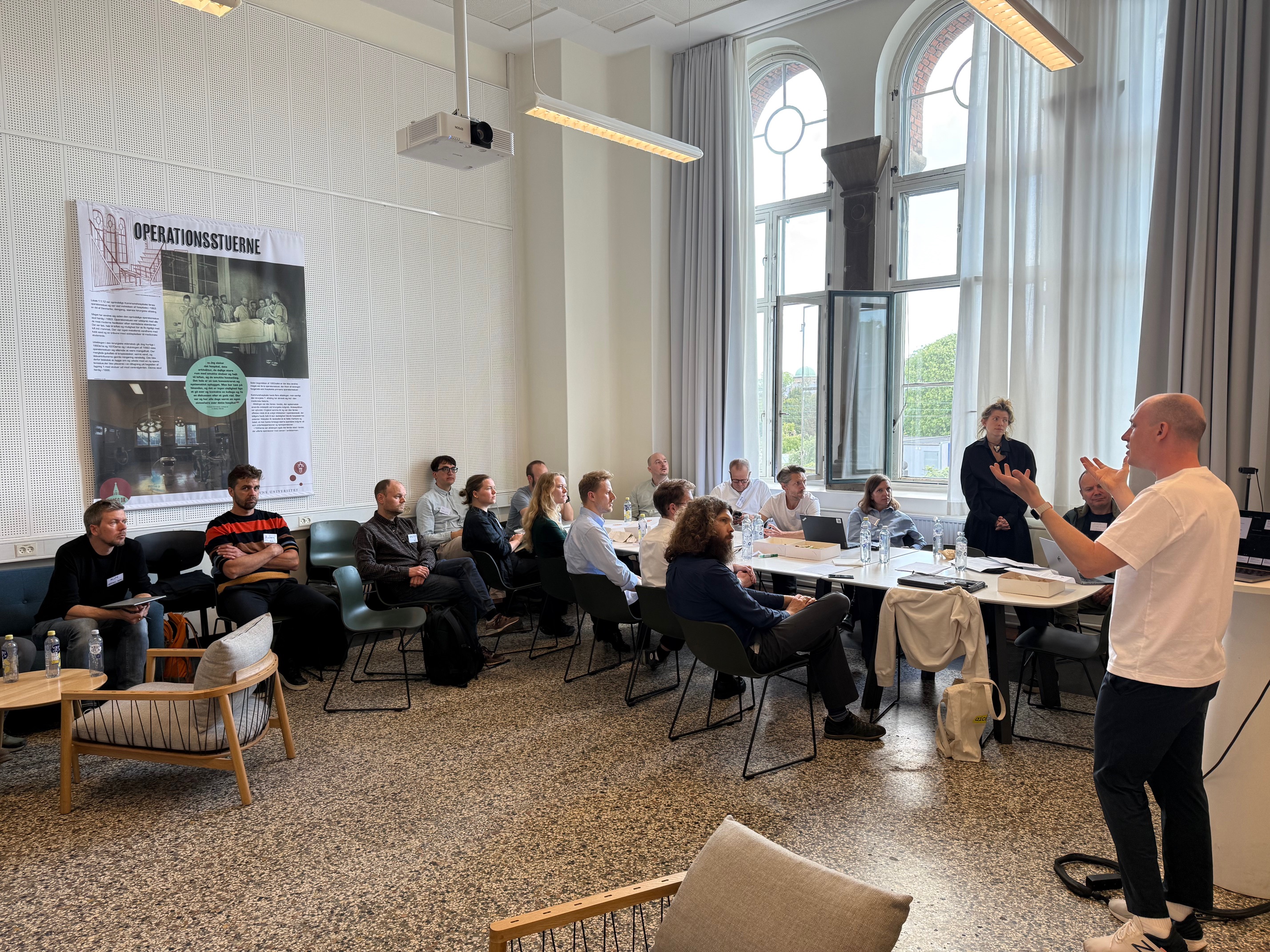
CAISA hosted its first workshop titled "AI building blocks: Need-to-do and Nice-to-do in the race for digital sovereignty" (Translated) organized by CAISA's chief scientists Roman Jurowetzki and Morten Axel Pedersen.
Launch of the National Center for AI in Society (CAISA)

The launch of the National Center for AI in Society (CAISA) - a new national consortium for interdisciplinary research and advisory work on artificial intelligence (AI) in society