Current Fellows

Aysel is an Assistant Professor of Law, Human Rights, and Digitalisation at the University of Copenhagen. Her research focuses on how digital technologies and artificial intelligence (AI) in the public sector shape rights, public administration, and decision-making processes. She is a co-founder of Denmark’s first database on the use of AI in the public sector.
As a CAISA Fellow, Aysel is advancing the database into a sustainable transparency infrastructure that strengthens public oversight of algorithmic governance and contributes to the national debate on digital sovereignty.

Emilie is a PhD student at DTU Management, where she uses qualitative and ethnographic methods to study how digital infrastructure and data regulation are implemented in Danish primary schools.
As a CAISA Fellow, Emilie explores how open-source solutions differ from proprietary solutions in relation to data regulation in the public sector, with a particular focus on risk assessment, the allocation of responsibility, and organizational implications.

Shifa is an Assistant Professor in the Department of Electronic Systems at Aalborg University. Her research examines how AI-based robotic systems, particularly in healthcare, can support safe, transparent, and human-centered decision-making. Her work focuses on areas including intelligent prosthetics, medical robotics, and embodied AI.
As a CAISA Fellow, Shifa studies the responsible use of AI in prosthetic technologies and develops methods to improve transparency, evaluation, and public understanding of AI-driven assistive technologies. Her research contributes to ongoing discussions on trustworthy medical AI and the societal implications of intelligent prosthetics for treatment and rehabilitation.
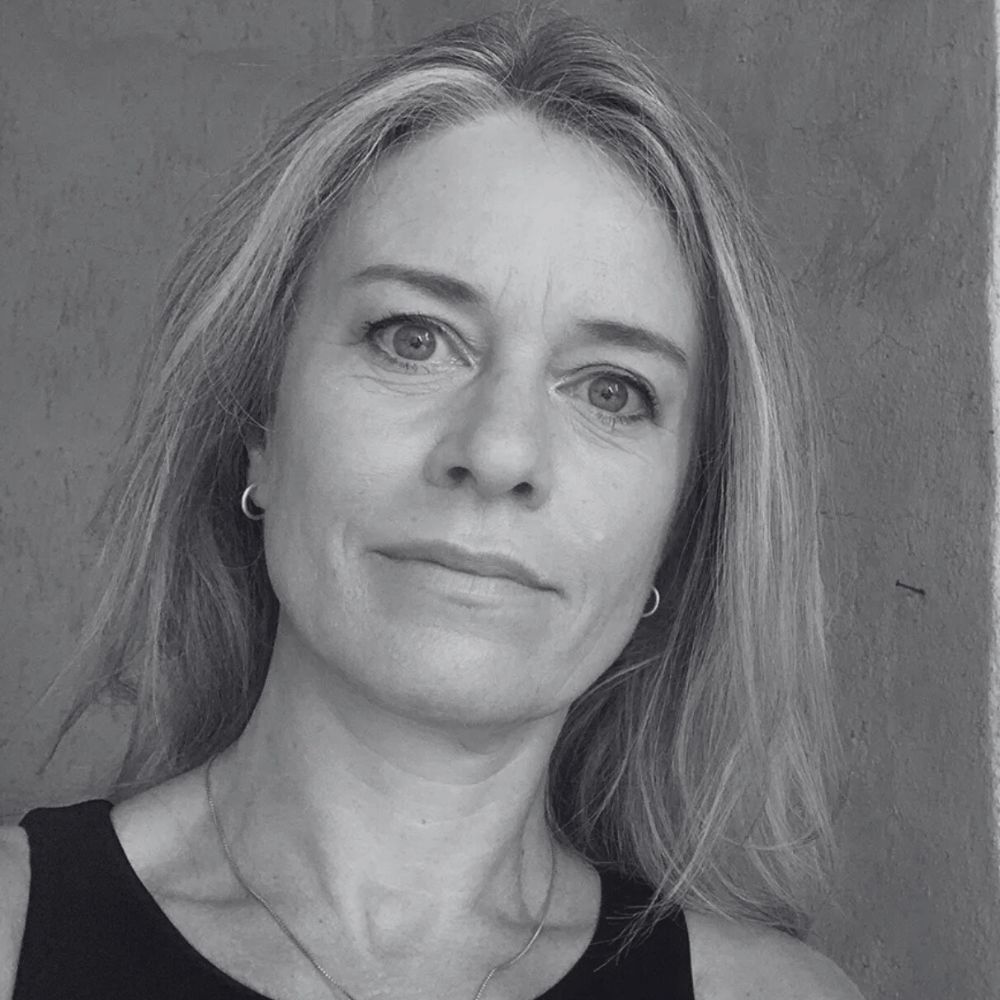
Iben is an Associate Professor of Media Studies in the Department of Communication and Culture at Aarhus University. Her research focuses on digital audio media and audio communication, with particular emphasis on the use and perception of synthetic voices and text-to-speech (TTS) technologies in public administration services.
As a CAISA Fellow, Iben will analyze data from the research project Stemmeboksen. Her work will provide a sonic and humanistic perspective on the implementation of AI-generated voices in digital government services, focusing on the non-linguistic communicative dimensions of synthetic voices and their cultural, ethical, and democratic implications.

Agnieszka is an Associate Professor at Aalborg University Business School. Her research examines global networks in international business and human resource management, with a particular focus on how shocks and disruptions reshape organizational relationships.
As a CAISA Fellow, Agnieszka focuses on decision-making and the human validation of AI-generated outputs, building on her previous research on AI adoption in organizations and AI-assisted qualitative research methods.

Bertram is a PhD student in the Data Science Section at the IT University of Copenhagen. He is a member of the Natural Language Processing (NLP) Group, where his research focuses on evaluating artificial intelligence (AI) and the reasoning capabilities of modern language models, as well as examining what “reasoning” means in the context of AI systems.
As a CAISA Fellow, Bertram will examine the technical foundations of AI “reasoning” and “thinking” models and explore how terms used to describe the generative process, such as “reasoning” and “thinking,” shape perceptions of AI systems, including language models.

Eszter is a postdoctoral researcher at the Center for Information Security and Trust (CISAT) at the IT University of Copenhagen. Her background is in digital health and dark patterns, and her research focuses on human-AI interaction in software development workflows within small and medium-sized enterprises (SMEs).
As a CAISA Fellow, Eszter will study how software developers communicate with AI, what types of support they expect, and how AI has reshaped self-directed problem-solving practices in software development.
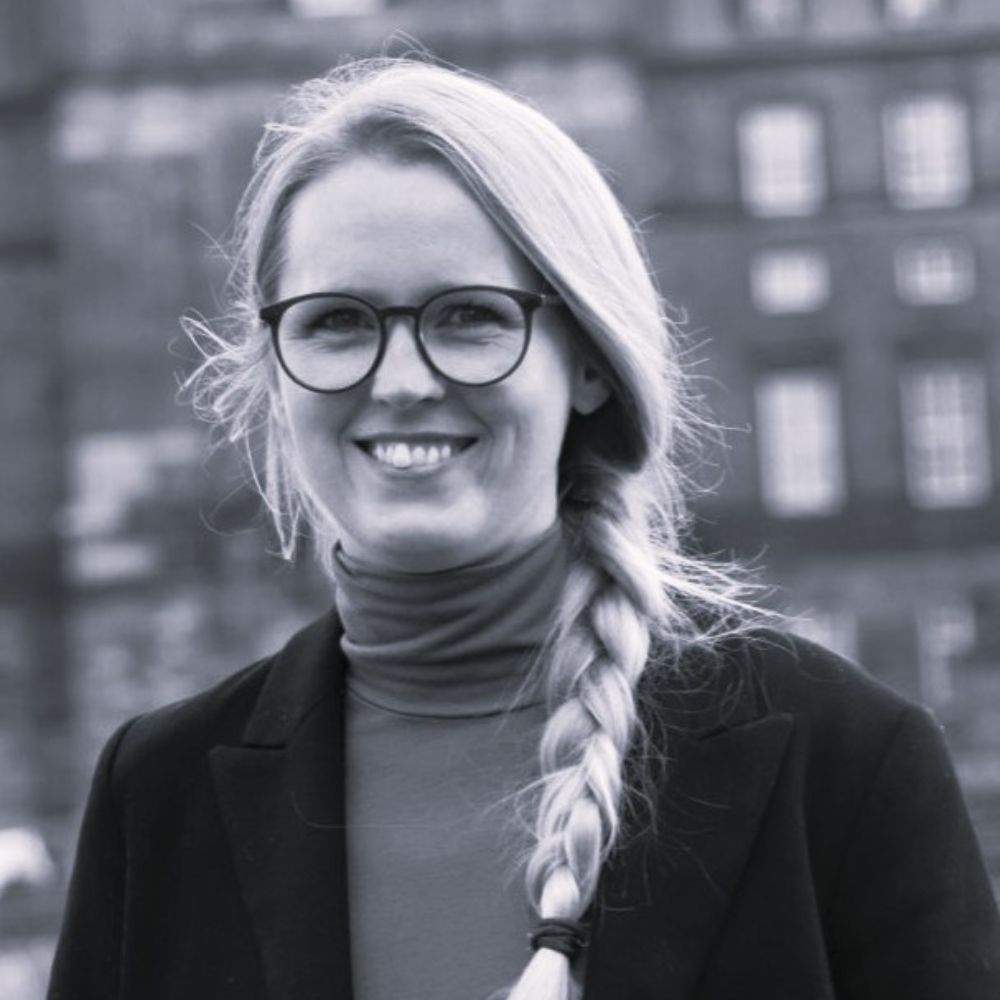
Melanie is a Postdoctoral Researcher at the Department of Politics and Society at Aalborg University. Her research focuses primarily on the democratic accountability of intelligence agencies and the police.
As part of her CAISA Fellowship, Melanie will examine how oversight bodies supervise intelligence agencies' use of AI in practice. The project aims to map the organizational practices and underlying logics that shape this oversight, as well as to identify the challenges and opportunities that arise from it.

Sander de Jong is a Postdoctoral Researcher in the Department of Architecture, Design, and Media Technology at Aalborg University. His research focuses on human-AI interaction, particularly how AI systems can be designed to encourage people to engage more critically with their outputs.
As a CAISA Fellow, Sander explores how large language models can help non-expert users interpret simulations of occupant behavior in buildings, contributing to better pre-construction design decisions with implications for occupant comfort and energy efficiency.

Through six interventions from leading European scholars in their field, this research brief examines the challenges of governing AI-generated content in an information environment where such content is rapidly becoming the norm. Drawing on interdisciplinary perspectives, the contributions assess the effectiveness and limitations of emerging AI transparency governance, particularly labelling requirements under the EU AI Act and the forthcoming Code of Practice on marking and labelling of AI-generated content. While transparency labels are normatively important for informing users about content provenance, research suggests that labelling alone is unlikely to mitigate manipulation, restore trust, or empower citizens. The research brief therefore argues for a broader transparency ecosystem that combines labelling with governance infrastructure, organisational accountability, and ongoing research to develop adaptive, evidence-based approaches to AI transparency.

Artificial intelligence has moved to the very center of Danish politics. During the government negotiations at Marienborg in April 2026, the talks were temporarily paused so that senior politicians could attend a seminar on AI and its societal implications.
At the seminar, CAISA Director Rebecca Adler-Nissen, together with Professor Abraham Newman (Georgetown University), contributed research-based perspectives on the role of AI in geopolitics, the economy, and democracy. Their presentation addressed, among other issues, how artificial intelligence affects security, labor markets, education, and Europe’s strategic position.
According to TV2, there was strong interest among the politicians, who actively engaged with questions related to both technological developments and societal consequences. Rebecca Adler-Nissen highlighted the high level of engagement and the growing demand for knowledge about the implications of AI across policy areas.
CAISA’s participation underscores the center’s role in bringing research-based knowledge into political decision-making processes and contributing to the responsible development of AI in society.
This brief is currently only available in Danish.
Summary (Translated)
Digital sovereignty is multidimensional and requires priority
In a time of geopolitical instability and rapid AI development, control over digital infrastructure and data has become critical. While there is broad agreement on the need for action at the national, Nordic, and EU levels, a shared language around digital sovereignty is still lacking. This lack of alignment leads either to inaction or to narrow technical solutions without strategic direction. The core argument of the brief is that digital sovereignty is a multidimensional concept, involving both principled positions and pragmatic choices. Reducing it to technical solutions risks overlooking the values and trade-offs that determine who controls and benefits from these systems. Conversely, focusing solely on values leads to abstract principles without practical implementation or real impact. Digital sovereignty is rarely about choosing between full self-sufficiency and total dependence. Rather, it is about balancing often competing demands for openness, security, competitiveness, growth, values, and rights in a world where capabilities are unevenly distributed. This means that it is necessary to define who or what is to be protected or promoted, within the domains of security, economic growth, or citizens’ rights, and to recognize that choices in one domain may strengthen or undermine another. The brief focuses on AI as the area where digital sovereignty is most acutely at stake, but the concepts apply more broadly to digital infrastructure and data. It provides decision-makers with tools to navigate these dilemmas by presenting:
- A conceptual framework for identifying who or what should be digitally sovereign.
- An overview of how digital sovereignty is prioritized around the world.
- An understanding that sovereignty can be exercised through three control regimes: ownership, expertise, or regulation – but that none of these are sufficient on their own.
The central implication of the brief is that digital sovereignty requires an integrated strategy that combines ownership, expertise, and regulation, while managing the interdependencies and trade-offs between security, economic growth, and citizens’ rights through clear objectives. Without this holistic approach, there is a risk of ineffective regulation, unusable infrastructure, or a lack of capacity to develop, maintain, and apply solutions in practice, potentially undermining security, growth, or rights.