Former Fellows

Jeppe Agger Nielsen is a Professor in the Department of Politics and Society at Aalborg University. He leads the Center for IT Management (CIM) research group, and his research focuses on digital transformation and artificial intelligence from an organizational theory perspective.
As a CAISA Fellow, Jeppe examined the use of artificial intelligence among SMEs and published a research brief on the topic.


Lucas is a Research Assistant at Aalborg University, where he researches digital technologies, learning, and collaboration.
As a CAISA Fellow, Lucas examined how artificial intelligence can support fair, consistent, and transparent assessment in oral examinations.

Stephanie is an Assistant Professor at the Center for Social Data Science (SODAS) at the University of Copenhagen. She has a background in natural language processing (NLP), and her research focuses on human-centered explainability and the application of NLP in political science.
As a CAISA Fellow, Stephanie examined how large language models (LLMs) can be used in voting advice applications for the 2026 Danish parliamentary election.

Hannes is an Associate Professor of Health Economics in the Department of Economics at the University of Copenhagen and Deputy Head of the Firms and Markets Department at DIW Berlin. His research examines how artificial intelligence shapes decision-making by influencing individuals’ information environments and incentives in healthcare and beyond.
As a CAISA Fellow, Hannes explored the use of artificial intelligence in general practice, drawing on recent empirical evidence and engagement with healthcare professionals and stakeholders.

Ilker is a Postdoctoral Researcher in the Language and Multimodal Processing Group in the Department of Computer Science at the University of Copenhagen. His research focuses on natural language processing (NLP), with a particular interest in pixel-based language modeling and multimodal learning.
As a CAISA Fellow, Ilker examined how generative multimodal AI models moderate content related to political and public figures. He mapped biases across countries and models, contributing new insights into political bias in generative AI.
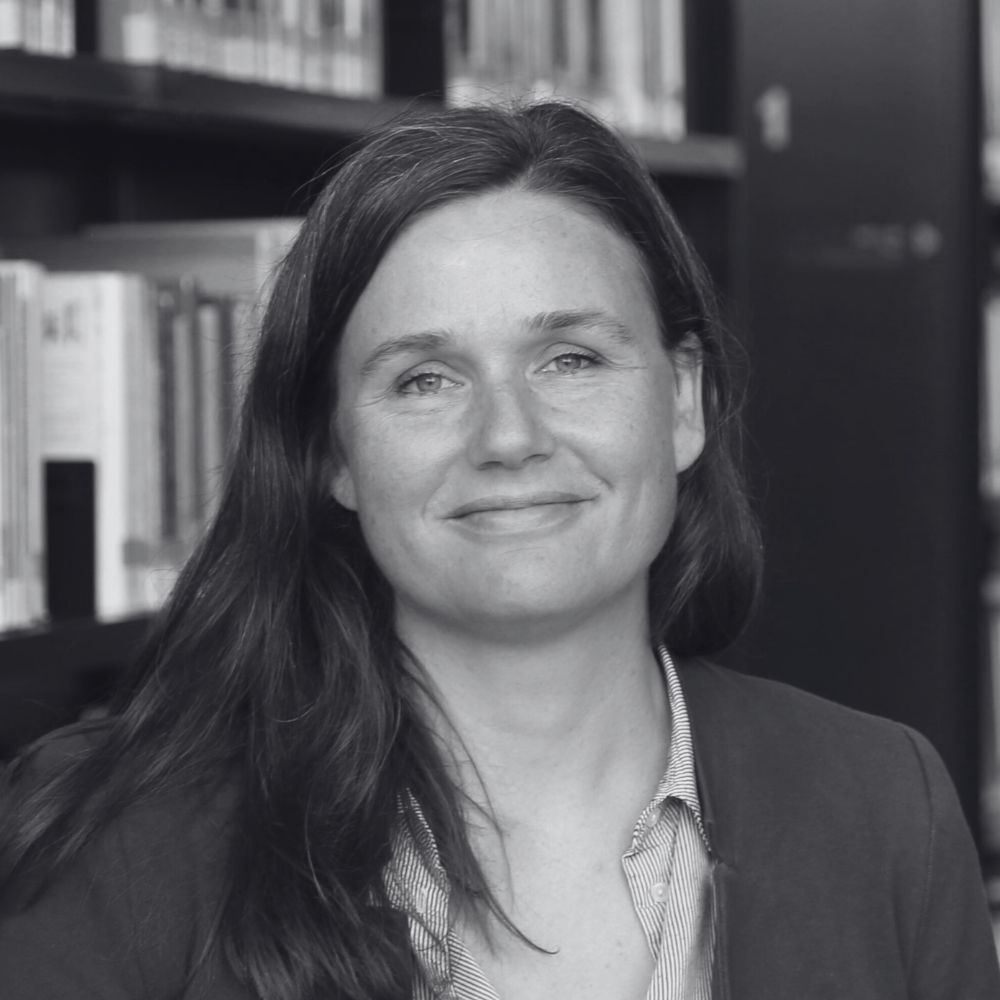
Agnete is an Associate Professor in the Department of People and Technology at Roskilde University. Her research focuses on care work in the healthcare and eldercare sectors, with a particular emphasis on how new technologies, including artificial intelligence (AI), influence care practices, relationships, and ethics.
As a CAISA Fellow, Agnete examined the ethical implications of AI in eldercare and compiled existing knowledge into a practice-oriented research brief. Through interviews with municipalities and key stakeholders, she identified and explored the ethical dilemmas that arise when AI is integrated into care work, contributing to a more nuanced and informed discussion of responsible AI in Danish eldercare.

Anja is a Professor of Media Studies and Director of DATALAB at Aarhus University. Her research focuses on how AI-driven algorithms shape collective behavior and democratic processes, and she has played key roles in international expert groups on disinformation and digital democracy. She currently chairs the EU Code of Practice on transparency in AI-generated content.
As a CAISA Fellow, Anja contributed to finalizing the EU Code of Practice, which guides companies in complying with AI regulation and transparency requirements. This work involved ongoing dialogue with industry, civil society, and academia, as well as input from EU Member States and institutions ahead of its publication in June 2026.

Samuel researches human-centered AI, with a particular focus on conversational agents and chatbots. His work explores how AI systems can be designed to support people in sensitive and reflective contexts, including health, well-being, and creative practices.
As a CAISA Fellow, Samuel examined how the framing and presentation of chatbot memory and data retention shape users’ comfort, privacy perceptions, and willingness to self-disclose.

Jun is an Associate Professor at the Center for Tracking and Society at the University of Copenhagen, where he leads a Sapere Aude: DFF-Starting Grant project. His research explores the relationship between people and digital technologies, with a particular focus on datafication, management, and artificial intelligence from a comparative perspective.
As a CAISA Fellow, Jun examined how AI benchmarks function as infrastructures that shape AI development through sociotechnical practices influenced by power relations, institutional interests, and geopolitical ambitions. His work highlights how these benchmarks influence what is considered legitimate knowledge, performance, and progress in artificial intelligence.