Events
The event took place:
26.05.2025
kl.
12:00
kl.
16:00
26.05.2025

AI Building Blocks: Need-to-Do and Nice-to-Do in the Race for Digital Sovereignty (Translated)

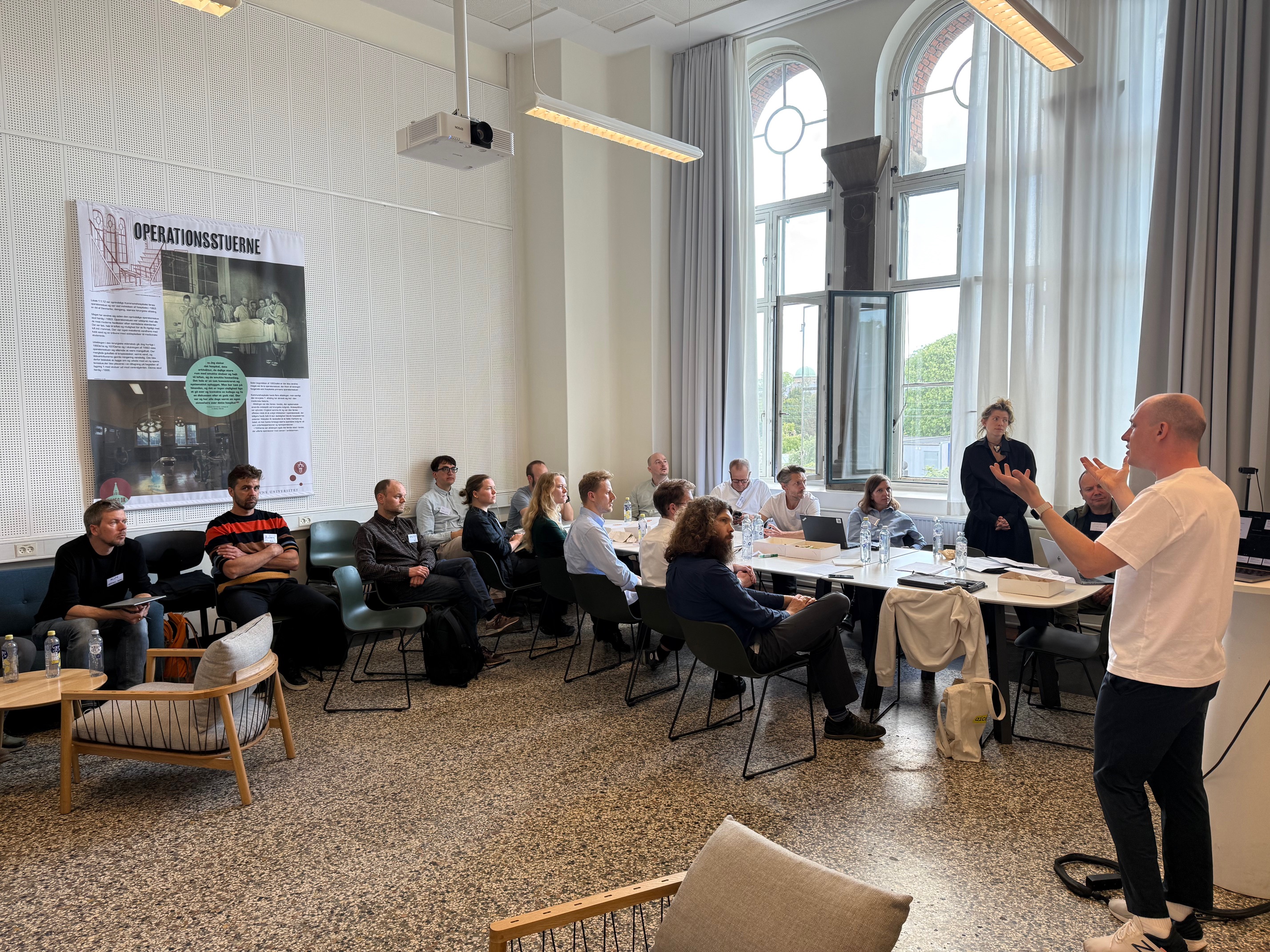
CAISA hosted its first workshop titled "AI building blocks: Need-to do and Nice-to-do in the race for digital sovereignty" (Translated) organised by CAISA's chief scientists Roman Jurowetzki and Morten Axel Pedersen.

Together with specialists from industry, the municipal sector, academia, and representatives from the Digital Taskforce for Artificial Intelligence, we explored key infrastructure challenges for digital sovereignty and outlined potential technical solutions.

The workshop marks the first in a series of technical sessions hosted by CAISA, bringing together AI experts across sectors.

Read more
Read more

Other events

30.04.2026
kl.
9:30
30.04.2026
kl.
10:30

WEBINAR: Digital Suverænitet – få et fællessprog og forstå de afgørende domæner og kontrolregimer

Alle taler om digital suverænitet, men begrebet betyder vidt forskellige ting, alt efter om man sidder i et ministerium, en bestyrelse eller et forskningscenter. Og det er faktisk rimeligt nok, for digital suverænitet er forskellige ting. Men uden et fælles sprog risikerer vi at tale forbi hinanden, netop når beslutningerne haster:

Europas afhængighed af amerikansk cloud-infrastruktur vokser, AI kapløbet mellem Washington og Beijing accelererer, og Danmark skal navigere begge dele.

Digital suverænitet er komplekst – men hvad hvis vi fik et fælles sprog, så vi kan handle?

I dette webinar præsenterer Rebecca Adler-Nissen, Roman Jurowetzki, Morten Axel Pedersen og Kristin Eggeling et nyt forskningsbrief, der klæder dig på til at forstå:

Tre domæner, der kan afveje: sikkerhed, økonomi og rettigheder – og hvorfor de er gensidigt afhængige.

Tre kontrolregimer, der skal integreres or at lykkes: Ejerskab (af hardware, software, AI-modeller mv.), Videnskapacitet (organisatorisk, juridisk og STEM-kompetence) og Regulering (statslig, international eller fra magtfulde private aktører).

Hvorfor det kræver en treenighed – og hvad der sker, hvis ét element mangler (f.eks. ineffektiv regulering, dyr infrastruktur eller brain drain).

Efter præsentationen er der debat med Jan Damsgaard, professor og digital vismand og Rikke Frank Jørgensen, professor samt forskningschef ved Institut for Menneskerettigheder om, hvordan vi omsætter teorien til praksis.

Praktisk information

Format: Online webinar

Adgang: Link til webinaret tilsendes et par dage inden afholdelsen

Læs mere
Tilmeld dig her
16.04.2026
kl.
9:00
16.04.2026
kl.
10:00

Who Would ChatGPT Vote for and Why Should We Care?

A timely discussion in the wake of the Danish national elections.

Join us on April 16, 2026 for croissants, coffee, and a very timely and highly relevant one‑hour event examining how voters increasingly turn to AI chatbots for political guidance, and what this means for information quality, democratic participation, and digital critical thinking.

As tools such as ChatGPT, Claude, and Gemini rapidly enter the public information ecosystem, voters now navigate a landscape where AI-generated recommendations can influence perceptions of parties, policies, and political choices. This event brings together leading researchers and practitioners to discuss how AI-driven voting advice shapes public understanding and how societies can strengthen citizens' ability to evaluate such information critically.

Program & Speakers

Voting Advice in the Age of AI

Frederik Hjorth

Associate Professor at the Department of Political Science and the Center for Social Data Science, University of Copenhagen

Chatbots, First-Time Voters, and Digital Critical Thinking

Søren Engelbrecht

Journalist at TjekDet

Political Bias in Chatbots

Stephanie Brandl

Assistant Professor at the Center for Social Data Science, University of Copenhagen and Fellow at CAISA

The event concludes with a joint Q&A session, offering space for cross-cutting reflections and questions to all speakers.

Practical details

Date: April 16, 2026
Time: 9:00 - 10:00 a.m. (Doors open at 8:30 a.m. for coffee and croissants)

Location:
Blegdamsvej 3B, 2200 Copenhagen N. Room: Panum – Auditorium Victor Haderup

Læs mere
Sign Up Here
Eventos
Read more
newness
CAISA prioritizes international engagements and welcomes opportunities to present and discuss our interdisciplinary research approach

CAISA actively prioritises international engagement and welcomes opportunities to present our distinctive interdisciplinary AI research model.

We have met with delegations from countries including Norway, Estonia, and Germany. Most recently, we hosted Nigeria's Minister of digital affairs, Innovation and Digital Economy, H.E. Dr Bosun Tijani, and his delegation. The Nigerian delegation shared their strategic plans to install 90,000 km of fibre-optic cables to strengthen national digital infrastructure, as well as the strong enthusiasm for AI among Nigeria’s young population.

Among other things, CAISA highlighted the importance of research on how artificial intelligence can be developed and applied in a responsible and democratic way.

Read more
Research
Read more
Eventos
Read more
newness
CAISA Deputy Head of Centre Thomas Moeslund appointed to the Danish Data Ethics Counsil

CAISA is proud to announce that our Deputy Director, Thomas Moeslund, has been appointed as a new member of the Danish Data Ethics Council. The appointment reflects his longstanding contributions to research in artificial intelligence and computer vision, as well as his strong commitment to resonsible AI and ethical technology development.

As a professor at Aalborg University and an internationally recognised researcher, Thomas has worked extensively on the intersection between advanced algorithmic methods and their societal implications. His research spans from foundational methodological development to applied AI solutions, with a focus on transparency, fairness, autonomy, and long-term impact.

Data ethics as the foundation for responsible AI

At a time when developments in artificial intelligence are advancing faster than both regulation and society’s shared understanding, the need for strong data ethics and responsible AI governanceis becoming increasingly urgent. Manipulated content, automated decision-making, and new applications of generative AI are creating significant challenges for citizens, businesses, and policymakers alike.

Thomas Moeslund highlights the importance of a robust ethical foundation:

Data ethics, for me, is not an afterthought, but an integral part of the research, development and implementation of technology.” (Translated)

His perspective emphasizes that responsible AI cannot be separated from technical development, but must be embedded from the outset - from datasets and model design to implementation and real-world use.

The role of the Council in a complex technological landscape

As a member of the Danish Data Ethics Council, Thomas Moeslund will play a key role in addressing the ethical challenges arising from the rapid development of artificial intelligence (AI). This includes issues related to misinformation, algorithmic bias, and the impact of AI systems on democratic processes and societal structures.

On the Council's role, Thomas explains:

The Council can act as a bridge between technical experts, policymakers, businesses, and citizens - both by establishing shared ethical standards and proactive solutions before problems escalate, and by communicating these issues to the broader public.” (Translated)

His appointment brings a strong technological and research-based perspective to the Council, helping to ensure a responsible and human-centred development and use of AI in Denmark.

CAISA's perspective

At CAISA, we work to advance human-centred and responsible AI, and the appointment of Thomas Moeslund reflects exactly the type og expertise needed to develop AI solutions that are both technically advanced and ethically robust.

We look forward to contributing to this work through research-based insights and interdeciplinary perspectives from CAISA - and to follow Thomas's important role in shaping Denmark's national data ethics agenda.

Read more
Research
Read more
Eventos
Read more
newness
Read more
Research
The Use of Chatbots in the Public Sector

This research brief presents a systematic literature review of what current research literature conveys about the implementation and use of chatbots in public sector workflows and in interactions with citizens. The purpose of this research brief is to identify and analyze both the opportunities and challenges within this domain through a systematic synthesis of existing empirical research on the implementation and use of, as well as citizens’ attitudes toward and experience with, chatbots in the public sector. The brief shows that chatbots can contribute effectively to certain tasks in the public sector; however, they also generate new work and shifts in responsibilities for workers. From citizens’ perspective, research finds that well-educated, younger, and resourceful citizens are more likely to trust and have positive experiences with chatbots when interacting with public authorities, whereas for others, e.g., citizens with disabilities or citizens with more complex requests and challenges, chatbots create new friction in their encounters with the public sector. This may reinforce existing social and digital inequalities within the population.

Read more