Tech Policy Youth Committee

The Tech Policy Youth Committee (TPYC) strives to take an active role in the debate about the impact of digital technologies on society and daily life, including our welfare system, psychological well-being, cybersecurity, geopolitics, disinformation, inequality, green transition, and much more.

Tech Policy Youth Committee's logo

Why?

While digitalization brings advantages, it also raises concerns. It is essential to involve and engage the youth in the ongoing digital transformation, as it directly affects our future and because we possess an incredible amount of knowledge from growing up in a digital world.

Our goal is to forward the plurality of voices represented in our generation on questions of tech and digitalization. We will do this with a common understanding of which values should guide future development; asking what kind of society we want, and how tech could help enable this.

Additionally, we recognise that technological development does not necessarily equal human development. Therefore, we want to assess in which ways technology poses new challenges as well as new opportunities in society, such as social organisation, green transition, and equality.

We want to make tomorrow more just and inclusive, and inquire into where technology can facilitate improvement to humanity and the green transition, improve future generations' life conditions, and call for a rights-promoting approach.

What?

TPYC is a high-commitment committee. We meet four times per semester at meetings centered around different topics within the field of tech policy. These meetings are organized by the committee members and are a mandatory part of being a member. In addition to this, we strive to host events (both internally and externally), write opinion pieces and policy briefs, and engage with key stakeholders in academia, the private/public sector, and civil society. We organize working groups centered around different projects the committee members are interested in.

Who?

The Tech Policy Youth Committee (TPYC) is open to students enrolled or on exchange at a Danish higher education institution who wish to engage themselves in the present and future development of Tech Policy. Both bachelor and master students can apply. We seek to cultivate diversity among members and encourage students from all academic backgrounds to apply. Currently, the committee is comprised of 25 students with a plurality of different academic backgrounds.

As a member, you commit yourself to a semester’s active participation. Members are welcome to stay as active members for the duration of their studies.

How?

We welcome new applications to join TPYC before the beginning of each semester. Keep an eye out for our LinkedIn page, where we will post calls for new members and deadlines.
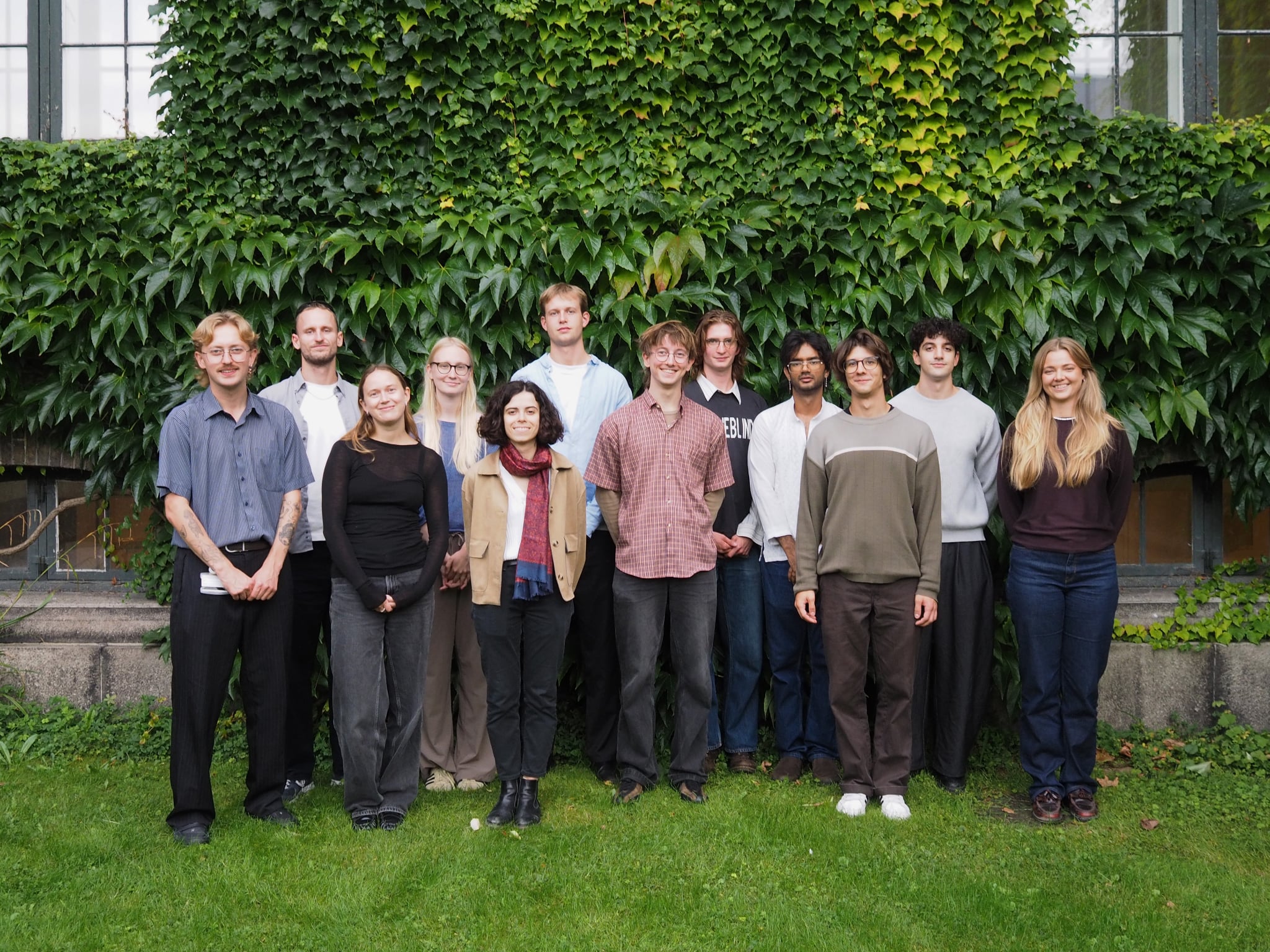
The Tech Policy Youth Committee meeting with Caroline Stage Olsen, Danish Minister for Digital Affairs.

Members of the Committee

Coming soon

Chairs of the TPYC

Chair: Lukas Valentiner-Branth Garly

Vice Chair: Halle Kamil Al-Hassani

Get in touch

Email: cphtpyc@pm.me

LinkedIn: Tech Policy Youth Committee

Highlights from our work

Below you can access examples of the committee's work.

CAISA has received a grant of DKK 45 million from the research reserve for a collaboration with Statistics Denmark. The partnership aims to strengthen both research in responsible artificial intelligence and the infrastructure that enables such research through two key initiatives:

  • The first initiative will modernize Statistics Denmark’s infrastructure for AI research, allowing researchers to work securely with complex data sources and train large AI models on Danish register data.
  • The second initiative will generate new knowledge on the responsible use of AI algorithms, ensuring they meet requirements for fairness, transparency, and trust - while maintaining their functionality over time.

The CPH Tech Policy Committee brings together researchers and professionals from the public sector, industry, and civil society to address key challenges in technology and digital policy, grounded in the latest research.

The committee works to connect Danish experiences with international best practices and to foster new, long-term global partnerships.

The Tech Policy Youth Committee (TPYC) is a student-led initiative that brings together engaged students to discuss and influence the future of technology policy. The committee explores critical topics including digitalization, welfare, mental well-being, cybersecurity, geopolitics, disinformation, inequality, and the green transition.

As a member, you become part of an active network, participate in meetings and events, and collaborate with key stakeholders from civil society, industry, and the public sector. the tech Policy Youth Committee aims to amplify young people's voices in debates on digitalization and technology, contributing to a more inclusive and equitable digital future.

Tech Policy Youth Committee's logo

CAISA is part of the Danish government’s strategic initiative for artificial intelligence (AI) and one of four new initiatives aimed at advancing responsible AI. The other initiatives include:

  • The Digital Taskforce for Artificial Intelligence, established in collaboration with KL and Danish Regions
  • The development of a platform to accelerate secure and transparent Danish language models
  • The provision of Danish text data as open-source resources
CPH Tech Policy Committee

CPH Tech Policy Committee samler forskere og fagfolk fra den offentlige sektor, virksomheder og civilsamfundet for at diskutere udfordringer inden for teknologi- og digitaliseringspolitik med afsæt i den nyeste forskning. Udvalget arbejder for at bringe danske erfaringer i dialog med internationale praksisser og skabe nye, varige globale partnerskaber.

CPH Tech Policy Youth Committee

CPH Tech Policy Youth Committee er et studenterdrevet udvalg, der samler engagerede studerende for at debattere og forme fremtidens teknologikpolitik. Udvalget arbejder blandt andet med digitalisering, velfærd, psykisk trivsel, cybersikkerhed, geopolitik, desinformation, ulighed og den grønne omstilling.

Som medlem bliver man en del af et aktivt netværk, deltager i møder, events og samarbejder med centrale aktører fra civilsamfundet, erhvervslivet, og den offentlige sektor.

CPH Tech Policy Youth Committee arbejder for at styrke unges stemme i debatten om digitalisering og teknologi og dermed bidrage til en mere retfærdig og inkluderende digital fremtid.

Strategisk indsats for kunstig intelligens

CAISA er en del af regeringens Strategiske indsats for kunstig intelligens og et af fire nye initiativer, der skal være med til at bane vejen for ansvarlig kunstig intelligens. De andre initiativer er:

Heading 1

Heading 2

Heading 3

Heading 4

Heading 5
Heading 6

Lorem ipsum dolor sit amet, consectetur adipiscing elit, sed do eiusmod tempor incididunt ut labore et dolore magna aliqua. Ut enim ad minim veniam, quis nostrud exercitation ullamco laboris nisi ut aliquip ex ea commodo consequat. Duis aute irure dolor in reprehenderit in voluptate velit esse cillum dolore eu fugiat nulla pariatur.

Block quote

Ordered list

  1. Item 1
  2. Item 2
  3. Item 3

Unordered list

  • Item A
  • Item B
  • Item C

Text link

Bold text

Emphasis

Superscript

Subscript

  • Den Digitale Taskforce for kunstig intelligens, som er etableret i samarbejde med KL og Danske Regioner
  • Etablering af en platform, som sætter skub på udviklingen af sikre og transparente danske sprogmodeller
  • Tilgængeliggørelse af danske tekstdata open source
Eventos
Read more
newness
CAISA prioritizes international engagements and welcomes opportunities to present and discuss our interdisciplinary research approach

CAISA actively prioritises international engagement and welcomes opportunities to present our distinctive interdisciplinary AI research model.

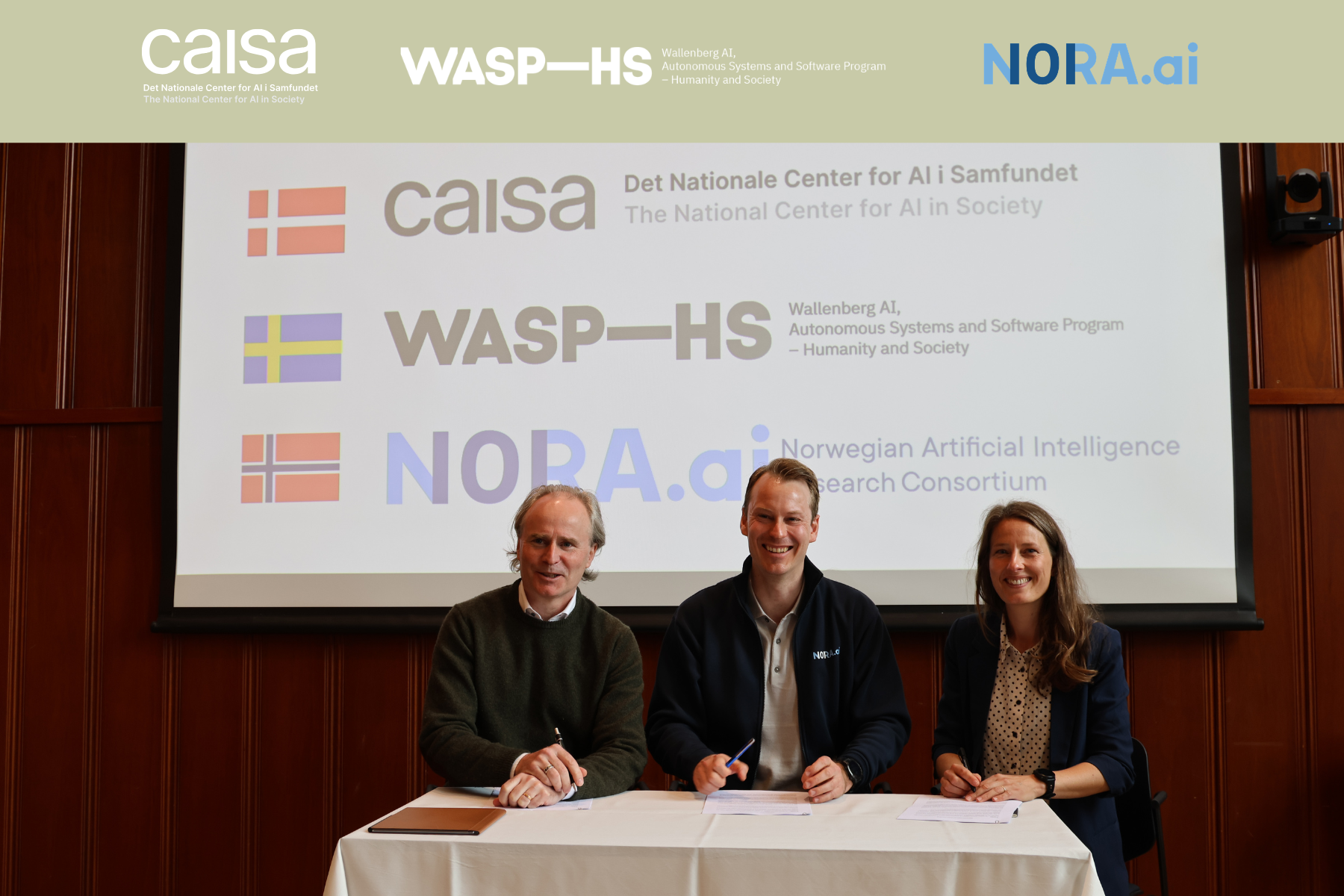
We have met with delegations from countries including Norway, Estonia, and Germany. Most recently, we hosted Nigeria's Minister of digital affairs, Innovation and Digital Economy, H.E. Dr Bosun Tijani, and his delegation. The Nigerian delegation shared their strategic plans to install 90,000 km of fibre-optic cables to strengthen national digital infrastructure, as well as the strong enthusiasm for AI among Nigeria’s young population.

Among other things, CAISA highlighted the importance of research on how artificial intelligence can be developed and applied in a responsible and democratic way.

Read more
Research
Read more
Eventos
Read more
newness
CAISA Deputy Head of Centre Thomas Moeslund appointed to the Danish Data Ethics Counsil

CAISA is proud to announce that our Deputy Director, Thomas Moeslund, has been appointed as a new member of the Danish Data Ethics Council. The appointment reflects his longstanding contributions to research in artificial intelligence and computer vision, as well as his strong commitment to resonsible AI and ethical technology development.

As a professor at Aalborg University and an internationally recognised researcher, Thomas has worked extensively on the intersection between advanced algorithmic methods and their societal implications. His research spans from foundational methodological development to applied AI solutions, with a focus on transparency, fairness, autonomy, and long-term impact.

Data ethics as the foundation for responsible AI

At a time when developments in artificial intelligence are advancing faster than both regulation and society’s shared understanding, the need for strong data ethics and responsible AI governanceis becoming increasingly urgent. Manipulated content, automated decision-making, and new applications of generative AI are creating significant challenges for citizens, businesses, and policymakers alike.

Thomas Moeslund highlights the importance of a robust ethical foundation:

Data ethics, for me, is not an afterthought, but an integral part of the research, development and implementation of technology.” (Translated)

His perspective emphasizes that responsible AI cannot be separated from technical development, but must be embedded from the outset - from datasets and model design to implementation and real-world use.

The role of the Council in a complex technological landscape

As a member of the Danish Data Ethics Council, Thomas Moeslund will play a key role in addressing the ethical challenges arising from the rapid development of artificial intelligence (AI). This includes issues related to misinformation, algorithmic bias, and the impact of AI systems on democratic processes and societal structures.

On the Council's role, Thomas explains:

The Council can act as a bridge between technical experts, policymakers, businesses, and citizens - both by establishing shared ethical standards and proactive solutions before problems escalate, and by communicating these issues to the broader public.” (Translated)

His appointment brings a strong technological and research-based perspective to the Council, helping to ensure a responsible and human-centred development and use of AI in Denmark.

CAISA's perspective

At CAISA, we work to advance human-centred and responsible AI, and the appointment of Thomas Moeslund reflects exactly the type og expertise needed to develop AI solutions that are both technically advanced and ethically robust.

We look forward to contributing to this work through research-based insights and interdeciplinary perspectives from CAISA - and to follow Thomas's important role in shaping Denmark's national data ethics agenda.

Read more
Research
Read more
Eventos
Read more
newness
Read more
Research
The Use of Chatbots in the Public Sector

This research brief presents a systematic literature review of what current research literature conveys about the implementation and use of chatbots in public sector workflows and in interactions with citizens. The purpose of this research brief is to identify and analyze both the opportunities and challenges within this domain through a systematic synthesis of existing empirical research on the implementation and use of, as well as citizens’ attitudes toward and experience with, chatbots in the public sector. The brief shows that chatbots can contribute effectively to certain tasks in the public sector; however, they also generate new work and shifts in responsibilities for workers. From citizens’ perspective, research finds that well-educated, younger, and resourceful citizens are more likely to trust and have positive experiences with chatbots when interacting with public authorities, whereas for others, e.g., citizens with disabilities or citizens with more complex requests and challenges, chatbots create new friction in their encounters with the public sector. This may reinforce existing social and digital inequalities within the population.

Read more